
Dongfeng Special Automobile Hydrogen Fuel Cell Bus Technology Breakthrough and Scenario-based Application Panoramic Analysis
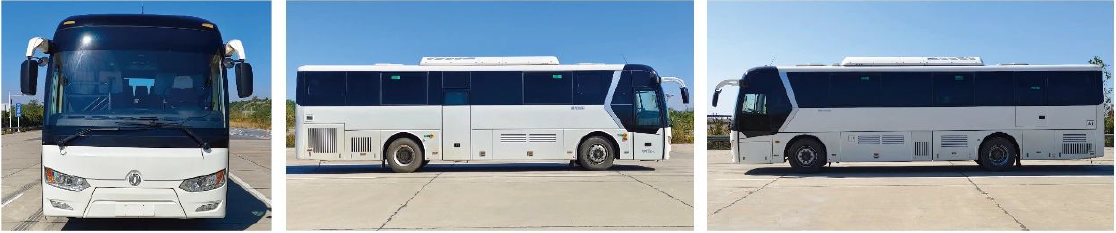
Driven by the global carbon neutrality goal, hydrogen fuel cell technology is reshaping the commercial vehicle industry. Dongfeng Special Automobile Bus (covering public transportation, long-distance passenger transportation and special-purpose vehicles) is the first to realize the large-scale commercialization of hydrogen-powered buses based on its own hydrogen-electric platform and scenario-based technology adaptation

I. Hydrogen-electric power system: from technological breakthrough to energy efficiency revolution
The engine is the “heart” of the bus, and its status directly determines the performance and operating economy of the whole vehicle. For the diesel engine and new energy range-extending system equipped with Dongfeng Special Automobile Bus, the following links need to be focused on:
1. Hydrogen core technology platform: four major competitive advantages of 400kW fuel cell
Dongfeng’s 400kW hydrogen fuel cell (Dongfeng Hydrogen Core H2 Core) released in 2025 breaks through the industry bottleneck.
(1) Ultra-high power density: single stack power reaches 400kW, meeting the peak power demand of 49-ton heavy trucks, and the power density exceeds 4.0kW/L;
(2) Extreme cold adaptability: -40℃ unassisted cold start, solving the pain points of cold region operation;
(3) Life and energy efficiency: designed life of 1.8 million kilometers, and the vehicle’s hydrogen consumption per 100 kilometers is reduced by 24.5%;
(4) Full chain autonomy: basic materials, flow field design to health monitoring are 100% autonomous and controllable, and the cost is reduced to thousands of yuan/kW.
2. Technological transition of the third generation of hydrogen heavy trucks
(1) Technological generations
① Second generation: The core breakthrough is 135kW plus 6×385L hydrogen bottles, and the energy efficiency is improved to ≤10kg per 100km.
② Third generation: The core breakthrough is lightweight integrated design (weight reduction of 1 ton), and the energy efficiency is improved to 9.5kg per 100km.
(2) Hydrogen supply system: lightweight bottle group reduces weight by 400kg, and new materials for bottle group frame reduce weight by 100kg;
(3) Cab: composite materials replace steel, reducing weight by 150kg;
(4) Power chain: motor + gearbox and axle are integrated, and the drive shaft is eliminated, reducing weight by 220kg and improving transmission efficiency.
II. Scenario-based application demonstration: from trunk logistics to urban public transportation
1. High-intensity logistics scenario: dual verification of economy and reliability
(1) Steel transportation line (Tianjin-Wu’an, Hebei): 20 49-ton hydrogen heavy trucks operated a 700-kilometer route, with a cumulative mileage of over 1.2 million kilometers, carbon reduction of 1,100 tons, and a life cycle fuel cost saving of 30 million yuan (when the hydrogen cost is 25 yuan/kg);
(2) Mine heavy-duty scenario: average daily operation of 20 hours, hydrogen consumption stability error <3%, adapted to continuous operation needs.
2. Urban passenger transport scenario: Solving the pain points of bus operation
(1) Cold region bus (Heilongjiang): 100% cold start success rate at -30℃, battery heating rate of 4℃/minute, ensuring attendance rate in extremely cold regions;
(2) Long-range bus: 3-5 minutes of fast charging for 500 kilometers, reducing the recharging time by 60% compared to pure electric vehicles, and improving vehicle turnover rate.
III. Safety protection system: Five-layer technical defense line builds operational safety
Based on hydrogen energy characteristics and bus scenarios, multiple active protection mechanisms are constructed.
1. Material-level protection: The hydrogen storage bottle adopts carbon fiber wrapped type III bottle (compressive strength> 70MPa), which completely avoids the risk of hydrogen embrittlement;
2. Leakage monitoring: 12 hydrogen concentration sensors are deployed throughout the vehicle, and the hydrogen source is cut off within 0.1 seconds of leakage;
3. Structural protection: hot melt plug + bursting disc double insurance, hydrogen is discharged at a low speed to prevent explosion in case of fire;
4. Emergency protection: automatic power off of high-voltage circuit + positive pressure ventilation of passenger compartment to ensure the safety of passengers;
5 Empirical safety: zero hydrogen accidents in cumulative operation of 50 million kilometers.
IV. Full life cycle economic model: Breaking the dilemma of “affordable to buy but not worthy to use”
1. Cost structure optimization
(1) Purchase cost: 100% for traditional oil vehicles and 300% for hydrogen buses. The battery stack is mass-produced (15,000 units per year) to achieve cost reduction.
(2) Fuel cost: 100% for traditional oil vehicles and 250% for hydrogen buses. The cost reduction path is to reduce the price of green hydrogen to below 20 yuan/kg.
(3) Maintenance cost: 100% for traditional fuel vehicles and 80% for hydrogen buses. The moving parts of the electric drive system are reduced by 40% to achieve cost reduction.
2. Calculation of economic turning point
(1) Break-even point: When the price of hydrogen is ≤28 yuan/kg and the annual operating mileage is >80,000 kilometers, the 5-year TCO is lower than that of diesel vehicles;
(2) Policy empowerment: The demonstration city cluster subsidy covers 40% of the vehicle purchase cost, and the hydrogen refueling station construction subsidy is 5 million yuan/seat.
V. Conclusion
Dongfeng Special Vehicle has made three breakthroughs, namely, technology iteration (400kW battery stack + lightweight), deep scene cultivation (trunk logistics/cold area bus), and safety reconstruction (five-dimensional protection), proving that hydrogen buses are not only environmentally friendly, but also an economical choice for high-frequency operation scenarios. Duramac’s global services are transforming the “Chinese solution” of hydrogen buses into a “local answer” suitable for different markets, promoting zero-carbon transportation from demonstration to popularization.

Online Service Sales Director-Mr.Jasper Lee Sales Manager-Mrs.Wendy Fu Spare Parts Sales-Miss. Nora Cao After-Sales Manager-Miss. Tina Zhang Merchandiser-Miss. Yoyo Tao

Contact EMAC Now!